

Why nearshore is beating offshore for US SaaS companies — and it's not just about timezones
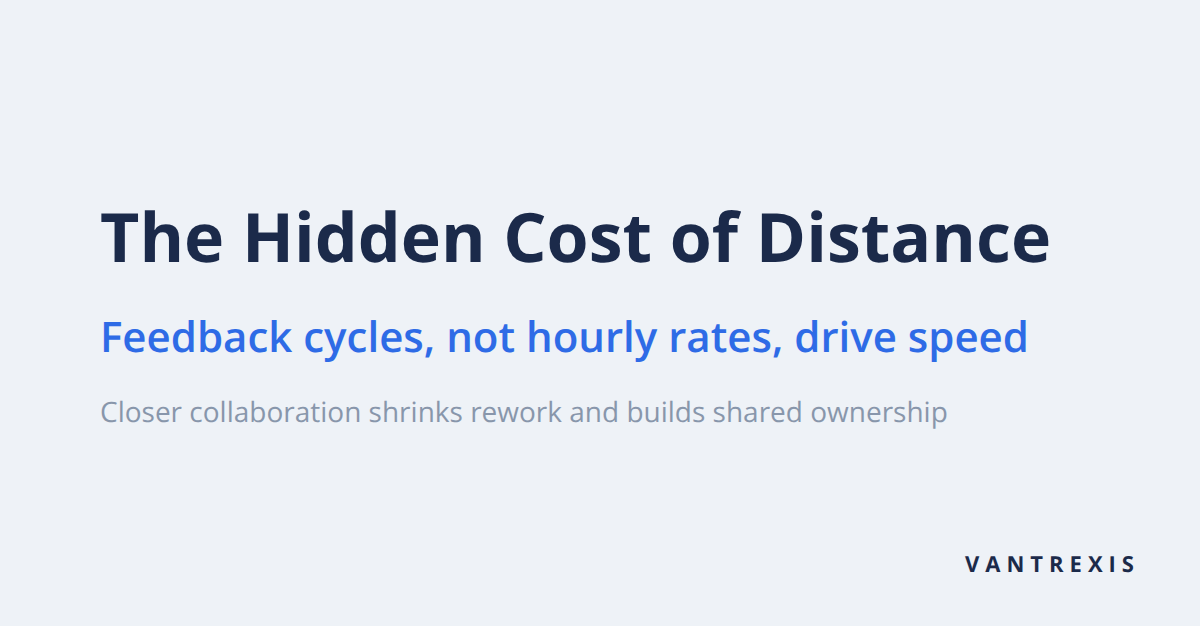
Timezone overlap is table stakes. This is about feedback loops.
The real cost of deep offshore isn't the hourly rate. It's the 18-hour round-trip on every decision.
Product questions, PR reviews, architecture calls — each one delayed by a working day. That compounds fast when you're shipping weekly.
𝗡earshore collapses that cycle. A 2–4 hour overlap means async gaps become synchronous conversations. Edge cases get resolved before they become blockers.
But the underrated advantage is cultural legibility. Shared professional norms around estimation, scope negotiation, and feedback tend to align closer between Europe and North America than most teams expect.
There's also a handoff problem people underestimate. Offshore teams often receive fully-specified tickets because real-time clarification is costly. That pushes all thinking upstream — onto already-thin product teams.
Nearshore changes the dynamic. Engineers can push back, ask in the moment, catch wrong assumptions before they're built. That's the actual speed gain.
→ Shorter feedback cycles = fewer rework loops → Cultural proximity = less translation overhead → Real-time access = shared ownership, not just delivery
The hourly rate difference between offshore and nearshore has narrowed significantly. The collaboration difference hasn't.
What tradeoff has surprised you most when working across time zones? 💬
If shorter feedback cycles and real-time collaboration matter to your team, explore how VANTREXIS nearshore engineers can fit into your workflow — Book a discovery call.
Working through a product or technical decision?
Share the context and start with a practical conversation.